Category: Uncategorized

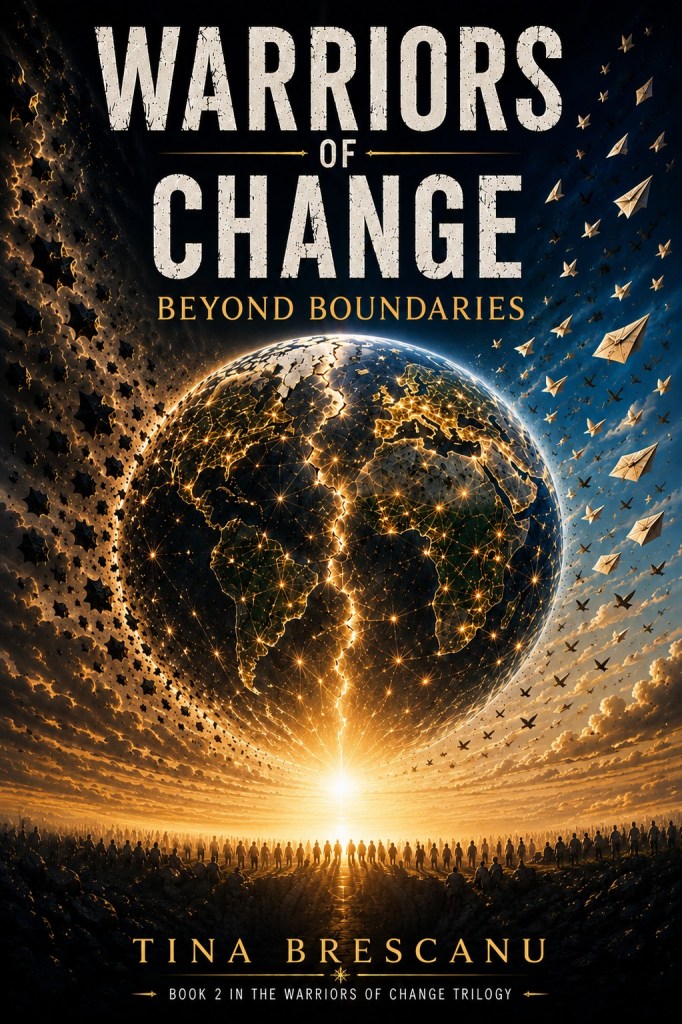
  • The Same Book. Two Completely Different Experiences.

    “I didn’t expect a book to understand me.”

    I’m fourteen and I’ve spent years feeling like adults hear me but don’t actually listen. Like school decides who I’m supposed to be before I even know myself. Like being young means waiting for life to begin.

    I picked up Warriors of Change expecting another story about brave kids changing the world. I was wrong.

    This book made me feel something stranger: recognised.

    It felt like someone had taken all the thoughts I’ve had but never said out loud—the anger at unfair rules, feeling different, questioning things everyone else accepts, wanting adults to guide instead of control—and put them into words.

    The Declaration of the Children of the Universe made me cry. Not because it was sad, but because for the first time I read:

    Maybe children are people now, not future people.

    I know some adults will think this book is rebellious or unrealistic. Maybe it is. But I think what scares people is the idea that young people might already know who they are.

    I didn’t agree with everything. I argued with parts. But weirdly, I think the book wanted me to argue.

    My favourite idea was that questioning isn’t wrong and change isn’t betrayal. I’ve always felt guilty for wanting different things from my family, my school, even my culture. This book made me think:

    What if becoming yourself isn’t selfish?

    After finishing, I didn’t feel inspired in the usual way. I felt… braver.

    I think some readers will hate this trilogy. Some adults especially.

    But if you’ve ever felt too loud, too sensitive, too imaginative, too rebellious, too different—or like no one takes you seriously because of your age—this book might feel less like reading and more like finally being heard.

    I wish I’d found it sooner.

    “Interesting, strange, and surprisingly sincere — but I’m not sure who it’s for.”

    I’m 16 and picked up Warriors of Change because the title sounded dystopian and rebellious. I expected something more like The Hunger Games or a YA fantasy about overthrowing a system. It’s not that.

    This book feels less like modern YA and more like someone trying to remember exactly what being young felt like before adulthood took over. Sometimes that works really well. Some parts made me stop and think:

    Why do adults always assume they know better?
    Why are children treated like unfinished people?

    The ideas about school, freedom, questioning beliefs, and being allowed to become yourself are interesting. I liked that the book doesn’t automatically side with authority.

    But I also kept wondering:

    Was this written by someone who was raising children or thinking about their own youth?

    Because sometimes the characters sound less like teenagers now and more like what adults wish teenagers would say if they could explain everything perfectly.

    Also… almost no phones? No social media obsession? No constant notifications? No AI? No influencers? No group chats exploding every five minutes?

    At first it made the world feel dated.

    Then I started thinking maybe that’s intentional.

    The book seems weirdly uninterested in trends and more interested in older questions:

    Who decides who you become?
    What if school isn’t helping everyone?
    Can traditions stop people becoming themselves?
    What do children know that adults forget?

    Those questions don’t really age.

    Some parts (especially the declarations and speeches) felt long, and occasionally it sounded more like a manifesto than a novel.

    But I respected that the book actually believes in something. A lot of books now are ironic about everything. This one isn’t embarrassed to care.

    I didn’t agree with all of it, and I’m not sure I was supposed to.

    I think readers will either feel deeply understood or roll their eyes completely.

    I ended up somewhere in the middle:

    I questioned it.
    I argued with it.
    But I kept thinking about it afterwards.

    Which might mean it succeeded.

  • We live in a time when involution is more important than ever

    Modern life encourages disconnection — from our bodies, our inner voice, and nature.
    Productivity is glorified.
    Doing is valued over being.
    Technology overwhelms intuition.
    Constant input drowns out inner wisdom.
    Identity becomes fragmented, shaped by algorithms.

    We need to remember who we are.

    Involution is being with yourself — fully and honestly.
    It’s not about escaping the world, but coming home to yourself within it.

    Involution is sacred solitude — and we all need it.

    Sacred solitude is how we rebalance, restore, and remember.
    It’s the quiet act of being fully present with yourself.

  • Eurovision is Not a Battlefield

    Eurovision is not a battlefield. There are no soldiers on that stage, only artists. It was created as a space where countries could meet through music rather than conflict, where political tensions were held back rather than performed.

    “Music unites us” is a comforting slogan, but unity becomes more complicated when participation itself is questioned. If shared spaces only remain open to those we approve of, what kind of unity is being protected?

    Debates over boycotts reveal something larger than disagreement about particular countries. They raise questions about culture, morality, and belonging. When does participation become endorsement? When does exclusion become principle? And who decides?

    People who choose not to boycott may be seen as indifferent, complicit, or disloyal. Others may see participation as a way of keeping dialogue possible. The disagreement is not only about politics. It is also about what cultural spaces are for.

    Eurovision has long carried contradictions. Countries compete while claiming unity. Histories of conflict sit beside performances of celebration. Identity is expressed, judged, rewarded, and sometimes rejected.

    Perhaps the question is not whether Eurovision is political. It almost always has been.

    Perhaps the harder question is whether culture should remain one of the few places where countries continue to meet despite disagreement.

    Because once shared spaces disappear, it becomes less obvious where people meet those they disagree with, misunderstand, or would not choose to spend time with at all.

  • What Story Does Eurovision Tell About Europe?

    Eurovision is often described as a song contest, but people rarely speak about it as if that is all it is. Many claim not to care. They laugh at it, criticise it, dismiss it as political, strange, over-produced, or irrelevant, and then they watch anyway. Sometimes openly. Sometimes from another room while insisting they are only watching because someone else put it on. Often while already knowing who should win and who should not.

    This says something.

    Perhaps Eurovision continues because it is not really about music, or not only about music. Every year, countries step onto a stage and perform a version of themselves. Not always who they are, but sometimes who they hope to be. Sometimes who they think Europe expects them to be. Sometimes who they once were, or who they refuse to stop being.

    For a few minutes, a song becomes something larger. It becomes identity.

    Some countries arrive with confidence. Others seem to ask for recognition. Some bring humour, folklore, absurdity, pain, rebellion, nostalgia, or longing. The performance ends, but the story does not. Votes are given, votes are withheld, patterns are noticed, and people argue. Beneath all of this sits a larger question:

    What is Europe?

    The word is used easily. European values. European identity. European culture. Yet no clear definition exists. Europe contains histories that do not fully agree with each other: empires and occupations, wars and reconciliations, languages and loyalties, countries that remember the same events differently.

    There is no single Europe. Eurovision complicates the idea further. Countries outside geographical Europe participate, while others sit at its edges—connected through history, politics, migration, or culture. Europe begins to look less like a place with clear borders and more like an ongoing negotiation about belonging. Who is included, who feels included, and who remains outside changes over time.

    There are many Europes. Nordic Europe. Balkan Europe. Post-Soviet Europe. Rural Europe. Urban Europe. The Europe of migration, memory, and inherited stories. The Europe imagined from outside, and the Europe people carry with them long after leaving.

    And still, once a year, countries gather and vote.

    Not because agreement exists, but perhaps because disagreement does.

    Eurovision survives, perhaps, because it allows contradiction. Countries insist: this is who we are. The contest quietly replies: you are also part of something larger. Neither statement disappears.

    This year’s winner sang:

    Welcome to the riot.

    And then came a made-up word:

    Bangaranga.

    Meaningless, perhaps. Or perhaps not.

    People create new words when existing ones no longer feel large enough. Maybe Bangaranga means: become yourself. Remember yourself. Resist disappearing into everyone else. But do not become so individual that connection is lost.

    Maybe this is true for countries too.

    No one country is Europe. All contribute to it. None define it.

    Perhaps Europe is not an identity at all. Perhaps it is an unfinished conversation—a place where histories meet without fully merging, where blame survives, memory survives, difference survives.

    And despite everything, people continue showing up.

    Singing.

    Voting.

    Wanting to be understood.

    Because beneath performance, competition, and politics, there may be something simpler: the desire for recognition.

    To say:

    See us.
    Remember us.
    Understand us.

    And perhaps Europe itself is asking for the same thing.

  • The Courage to Think

    Thinking is often treated as something automatic. We assume we’re already doing it because we have opinions, reactions, beliefs, and conclusions, but real thinking requires something more demanding. It requires openness.

    To think isn’t just to process information; it’s to allow ourselves to be changed by what we encounter. That isn’t easy. It means letting go of certainty, questioning what feels familiar, and staying with ideas that don’t immediately make sense. That takes courage.

    Inspiration is often treated as something external, something that arrives when the conditions are right. But it’s closely tied to thinking itself. It emerges when we stay open, when we’re willing to engage without needing immediate answers or clear outcomes.

    When I was growing up, characters like Pippi Longstocking, created by Astrid Lindgren, suggested that it was possible to move through the world differently, without needing to fit neatly into expectations or social norms. That kind of influence doesn’t just inspire behaviour; it changes how you think about what’s possible. In a different way, Tove Jansson, the creator of the Moomin books, encouraged a deeper kind of reflection, a willingness to examine and question rather than accept things as they are.

    Thinking doesn’t happen in isolation. It’s shaped by what we read, what we experience, who we encounter, and also by the language we move through every day. Language does more than communicate ideas; it shapes how we understand them. The words available to us influence what we can describe, question, and even notice.

    When language becomes simplified, shortened, or reduced to immediate reactions, thinking can become narrower too. Quick responses replace reflection. Nuance disappears behind slogans, captions, and certainty. Even digital forms of communication—text language, constant scrolling, emojis, and rapid exchanges—change the rhythm of thought itself. They’re expressive, efficient, and useful in many ways, but they also encourage speed over depth. And deep thinking rarely happens quickly.

    There’s a tendency to avoid discomfort by simplifying things, by turning challenges into easy explanations. Phrases like “everything happens for a reason” don’t open thinking. They close it. They offer resolution without understanding.

    Challenges aren’t interruptions to thinking; they’re what make it possible. To think well, we have to be willing to learn, unlearn, and relearn. That means meeting new situations without assuming we already understand them and allowing doubt, uncertainty, and contradiction to exist without rushing to resolve them.

    In that sense, thinking isn’t just an intellectual activity. It’s a way of being. And it begins with something simple but difficult: being open enough to change.

    Excerpt from Thinking Out Loud: Notes on Being Human

  • What Astrid Lindgren Understood About Children That We Still Don’t

    We like to believe that we respect children. We say we care about them, we protect them, we educate them, and we make decisions for them in what we call their best interest. But respect is something else entirely, and if we’re honest, we’re not very good at it.

    Astrid Lindgren understood that, not as an idea, but as a way of being. She didn’t just write stories for children, she wrote from their perspective, which is a very different thing. Most adults write down to children, simplifying, correcting, shaping, but Astrid entered their world without trying to control it.

    That’s why characters like Pippi Longstocking didn’t make sense to adults. She was too independent, too strong, too unpredictable. Adults were uncomfortable with her, but children weren’t. Children recognised something in her that adults had forgotten or perhaps never really trusted in the first place.

    We often say we love children, but love without respect easily turns into control. We decide what they should feel, what they should learn, how they should behave, and we call it guidance, when in reality it often becomes management. Astrid believed something much simpler and much more radical: give children love, more love, and then some more love, and common sense will come by itself. It sounds soft, but it isn’t, because it requires trust, and trust is exactly where we struggle.

    We don’t trust children to know themselves. We don’t trust them to feel deeply. We don’t trust them to grow without being shaped into something acceptable. And it shows in how we speak to them, how quickly we correct them, and how little space we give them to be fully themselves.

    Astrid didn’t just write about children, she defended them. She influenced how people thought, and her work contributed to Sweden becoming the first country to ban corporal punishment. That didn’t happen by accident. It came from a very clear understanding that children are not something to control, they are people.

    And yet, even now, that idea still feels radical. We celebrate her stories, we turn them into films, we quote her, but we don’t always live by what she believed. Because if we did, we would have to change how we listen, how we respond, and how much control we think we are entitled to have.

    It’s easier to admire Astrid Lindgren than to take her seriously. But maybe that’s the point. We don’t just struggle to understand children. We struggle to respect them.

  • If You Want to Understand Russian Culture, Start with the Food

    When we think about Russia, food is rarely the first thing that comes to mind.

    More often, it’s politics, history, stereotypes—vodka, potatoes, cold winters. But if you really want to understand a culture, food is one of the most honest places to start.

    Russian food is not just “Russian.”

    It has been shaped by many cultures—French, German, Scandinavian, Caucasian. It borrows, adapts, absorbs. What ends up on the table is a mixture of influences that, over time, becomes something distinct.

    And yet, because Western culture dominates how we define “good food,” Russian cuisine is often overlooked or misunderstood.

    We recognise dishes like borshch or beef Stroganoff, but beyond that, many dismiss it without really engaging with it. And when we dismiss the food, we are often dismissing the culture with it.

    Food is never just food.

    It carries memory, history, survival.

    Russia has experienced periods of abundance, but also repeated famine and scarcity. That leaves a mark. Food becomes more than nourishment—it becomes something to hold onto, something to protect, something to share.

    That’s why hospitality matters so much.

    Tables are full. Guests are fed generously. Bread and salt are offered as a sign of welcome and respect. Even strangers can be invited to eat.

    There is a sense that food is not just for the body, but for connection.

    There is also something deeply seasonal and grounded about it.

    Russians eat what is available—grains, root vegetables, cabbage, mushrooms, berries. Food is preserved, pickled, dried, stored for winter. Foraging is still part of life for many, a quiet activity that feels almost meditative.

    It’s a way of being connected to the land.

    At the same time, Russian food is rich, colourful, and layered.

    Tables filled with small dishes—zakuski—served before the main meal. Soups, fish, meat, breads. Sour cream in everything. Sweet pastries, pancakes, cakes.

    It’s abundant, even when it comes from a history of scarcity.

    And that’s where something interesting happens.

    Because food reflects how people have lived.

    If you look at Russian cuisine closely, you see:

    • survival and celebration
    • hardship and generosity
    • borrowing and belonging

    We often approach other cultures through our own lens.

    We compare.
    We judge.
    We say “I like this” or “I don’t like that.”

    But food asks something different of us.

    It asks us to sit at the table.

    To taste without immediately deciding.

    To be open to something that doesn’t come from our own experience.

    There are no language barriers when eating.

    You don’t need to speak Russian to understand something about Russian life when you share a meal.

    Russia is vast, complex, and often misunderstood.

    But if you want to understand even a small part of it, don’t start with explanations.

    Start with the food.

    Sit down.

    Taste it.

    And pay attention to what it tells you.

  • When Help Doesn’t Feel Like Help

    What happens when someone asks for help and leaves feeling worse?

    It’s not always obvious. No raised voices. No clear mistake. And yet something shifts. The person who came to be heard walks away feeling misunderstood, reduced, or dismissed. This happens more often than we like to admit. Systems of care are built with good intentions. Mental health professionals are trained to support, diagnose, and guide. People enter these spaces expecting help.

    But sometimes the experience doesn’t match the intention.

    There is often a quiet pressure in these systems to know.

    To identify the issue.
    To name it.
    To move towards a solution.

    Uncertainty is uncomfortable. It slows things down. So instead of sitting with not knowing, we move quickly toward interpretation.

    The person becomes something to be understood from the outside.

    Authority plays a role too.

    The professional holds knowledge and structure. The person seeking help, especially a young person, comes in vulnerable, often unsure of how to express what they’re feeling.

    This imbalance shapes everything.

    What gets said.
    What gets heard.
    What gets taken seriously.

    Sometimes the problem isn’t what is said, but how quickly we move past it.

    Advice comes before understanding. Reassurance replaces curiosity. Language is used to contain something that hasn’t yet been fully expressed.

    Nothing intentionally harmful. And yet the result can be the same: The person doesn’t feel heard.

    Many people have had the experience of leaving a session feeling worse than when they went in.

    Not because no one cared. But because something didn’t land. Because the response didn’t match the experience.

    This is about recognising a pattern, not blaming professionals.

    Systems that prioritise efficiency, outcomes, and clarity can unintentionally make deep listening harder. Even the most well-meaning professional is working within constraints. And those constraints shape how care is delivered. For young people, this matters even more.

    If the first attempt to speak is met with misunderstanding or judgement, the next attempt becomes harder. Trust weakens. Silence feels safer.  Not because there is nothing to say.
    But because it feels like it won’t be heard.

    So, the question is simple, but not easy:

    What would it mean to truly listen? Not to fix. Not to interpret too quickly. Not to guide the conversation toward a known outcome. But to stay with the person long enough for something real to emerge.

    Sometimes help doesn’t feel like help. Noticing that is a starting point, not failure.

  • We Are What We Surf

    We often hear the saying “we are what we eat.” Others say we become what we think. But in the digital age, another question arises: do we also become what we surf?

    The internet has become the most addictive tool in modern life. We use it daily for information, communication, entertainment and work. Its benefits are obvious, but its long-term effects on how we think and behave are still unclear.

    The internet has changed our relationship with knowledge and communication.

    We read less in the traditional sense, yet we write more than ever before. Millions of people produce texts every day through messages, posts and comments.

    We connect with more people across the world, yet those connections can sometimes be more superficial than the relationships we form offline.

    Online we construct versions of ourselves—digital personas that may not always align with who we are in real life.

    At the same time, the internet allows unprecedented collaboration. People exchange ideas across cultures and disciplines, build communities and challenge traditional sources of authority.

    In many ways we have become our own publishers, researchers and commentators. When we seek expertise, we no longer rely solely on traditional institutions; we search for it ourselves.

    Just as food shapes the body and thoughts shape the mind, the information environments we inhabit may also shape who we become.

    Perhaps in the digital age we are not only what we eat or what we think.

    Perhaps we are also what we surf.

  • Education and the Fear of Thinking

    Education is often described as the foundation of a healthy society. Politicians praise it, parents worry about it, and schools are expected to shape the next generation into capable adults. Yet the question we rarely ask is a simple one:

    Does our education system actually encourage thinking?

    In many ways, modern schooling rewards the opposite.

    Education as a system of obedience

    In Ireland, the Leaving Certificate and the CAO system determine much of a student’s future. A single set of exams decides which university course a student can enter and often what career path becomes possible. The result is predictable: students learn how to play the exam game.

    Instead of exploring ideas, questioning assumptions, or making intellectual mistakes, students become experts at recognising patterns in past papers and reproducing expected answers. Success is measured not by curiosity or creativity, but by how well someone can memorise and perform under pressure.

    The system produces excellent test-takers. It does not necessarily produce independent thinkers.

    Other countries have taken a different approach. Finland, for example, emphasises creativity, collaboration, and flexible educational pathways. Students are encouraged to experiment, question, and even fail. In such systems, mistakes are treated as part of learning rather than evidence of failure.

    The contrast reveals something deeper than educational policy. It reveals different attitudes toward risk and authority.

    Fear as a motivational tool

    Schools often rely on fear to maintain discipline and motivate students. Children are told that if they do not work hard enough, they will fail in life. Sometimes the warnings are even more dramatic: that they will end up unemployed, addicted to drugs or living under a bridge.

    Many teachers believe they are motivating students. But fear is a dangerous tool. Some children respond with compliance, but others respond with anxiety, perfectionism or despair.

    A child who is constantly worried about failure does not learn freely. Instead, they learn to avoid mistakes at all costs.

    When fear becomes the underlying emotional atmosphere of education, curiosity slowly disappears.

    The forgotten students: those who feel deeply

    Schools are designed around averages. They assume that children learn in similar ways, at similar speeds, and respond to pressure in similar ways.

    But children are not a homogeneous group.

    Some children are particularly sensitive to their surroundings. They process information deeply, ask difficult questions, and respond strongly to injustice or hypocrisy. These children are often curious and imaginative, but they can also struggle in rigid environments where conformity is rewarded.

    In such systems, sensitivity is often treated as weakness. A child who feels deeply may be told not to be so emotional, not to overthink, not to ask too many questions.

    Over time, many of these children learn a painful lesson: school is a place where they do not fit.

    The myth of “teaching critical thinking”

    Educators frequently claim that schools teach students to think critically. Yet critical thinking cannot simply be taught as a technical skill.

    True criticism requires something deeper: a critical spirit. It requires teachers and students who are willing to question assumptions, debate ideas openly, and tolerate uncertainty.

    In many classrooms, however, students are encouraged to repeat approved perspectives rather than challenge them. Discussions that appear critical sometimes function more like intellectual exercises in conformity.

    When questioning becomes selective, education begins to resemble indoctrination rather than inquiry.

    Education and the courage to think

    A healthy education system should cultivate something far more valuable than exam scores: intellectual courage.

    Students should be encouraged to explore ideas, challenge authorities, and pursue their own interests. They should learn that knowledge is not a set of fixed answers but a continuous process of discovery.

    Most importantly, they should feel safe enough to think freely.

    Education should not train students to memorise the correct answers. It should prepare them to ask better questions.

    Because in a rapidly changing world, the ability to question, adapt, and think independently will always matter more than the ability to pass a test.